Category Archives: creativity

BOOK REVIEW: EARTHLINGS

“My town is a factory for the production of human babies. People live in nests packed closely together. It’s just like the silkworm room in Granny’s house. The nests are lined up neatly in rows, and each contains a breeding pair of male and female humans and their babies. The Breeding pairs raise their young aside their nests. I live in one of these nests too.”
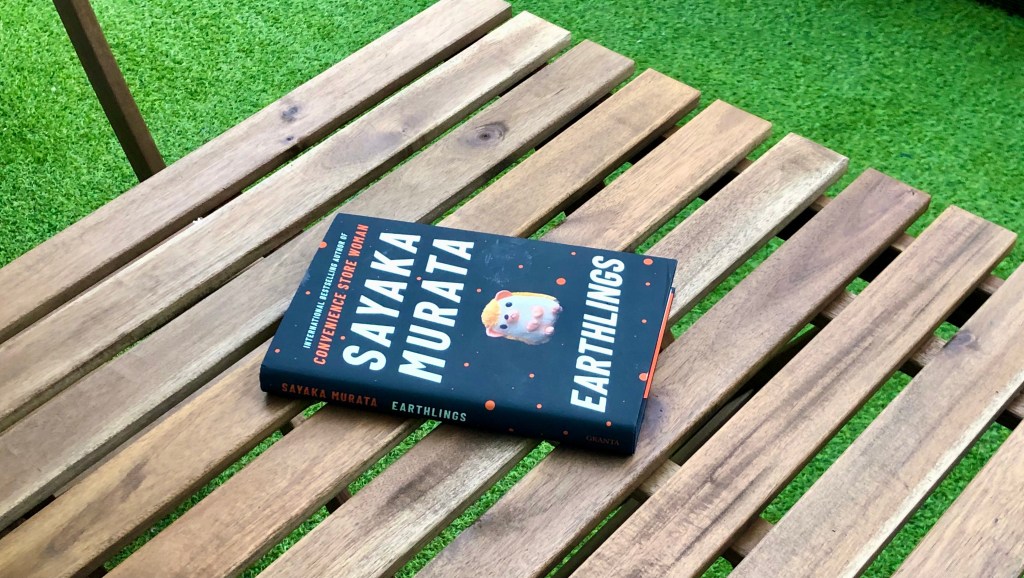
Earthlings is a book by Japanese author Sayaka Murata. The book follows the life of a girl named Natsuki who isn’t like other girls. She is a girl who doesn’t quite fit into the world and has difficulty abiding by the the rules of the world that she lives in. She has an ally who thinks like her, her cousin Yuu, and after a series of traumatic events the two of them are separated from each other and they both go on to live their lives of assimilation. The book then continues on to follow Natsuki in her adulthood where she is married to an asexual man and is living her day-to-day life trying to lead a normal life, while secretly believing that she is an alien from another planet. 

I enjoyed Sayaka Murata’s writing. I think her style of writing is very accessible and she has a talent for creating characters that are on the outskirts of society’s definition of “normal” that the reader instantly cares for. In this book I think she did a good job, once again, of challenging what it means to be a person part of a large society that has it’s own expectations on your time, mind and your body. In this book Natsuki has no intention of having children and she admits that because of this she is a failed component of the human factory. I enjoyed that our protagonist had the self awareness to identify where society had failed her, for example when adults were happy to look the other way when she was abused as a child and when her family mistreated her, whilst on the other hand she did not have the awareness to realise when she had gone too far in living this life as an alien.
“What I’m really scared of is believing that the words society makes me speak are my own. You’re different. That’s how I know you’re from another planet.”

This book deals with a lot of big topics (sexual abuse of minors being one of them) and the progression of this book felt unnaturally paced, as though maybe we needed more pages in order to come to terms with the ending, or at least understand the ending. That is why this book was sort of a mid tier book for me. I think it’s one you can pick up if you’re looking for something dark and out of the box then you should definitely read this book (taking into account that it might be triggering for some). If you haven’t read Sayaka Murata’s first book I would recommend that you start there in order to understand and appreciate her writing style before getting into this book. 

This isn’t a book I can recommend to anyone and everyone but it is a book that I think will be enjoyed by some who appreciate the writing, want something a little different  and are able to follow along the story, so pick this one up if that sounds like you. 
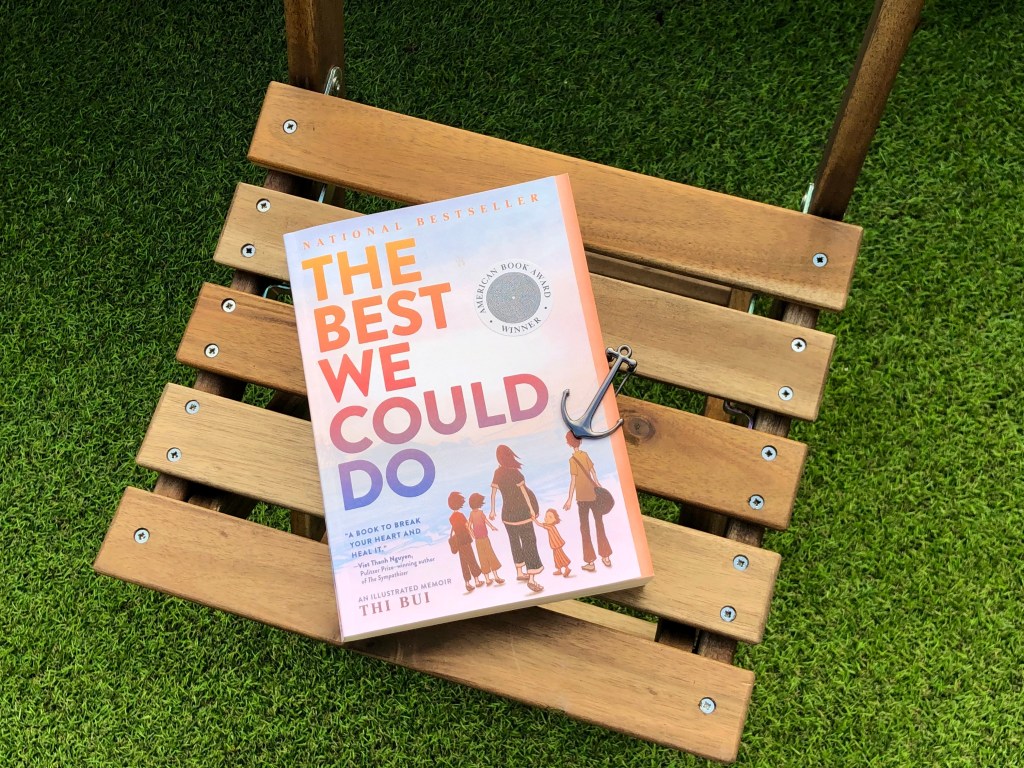
Book review: The Best We Could Do

“Every casualty in war is someones grandmother, grandfather, mother, father, brother, sister, child, lover”

Up until very recently, I have shyed away from graphic books because I think somewhere between crossing the line from children’s books (which I am also back to reading because I love children’s books) and reading grown up books I adopted this strange fear that reading books with graphics and pictures wasn’t actually reading. I kept thinking this for a while, looking at graphic novels, touching them and then slowly backing away right before I was accused of not being a “real” reader. 

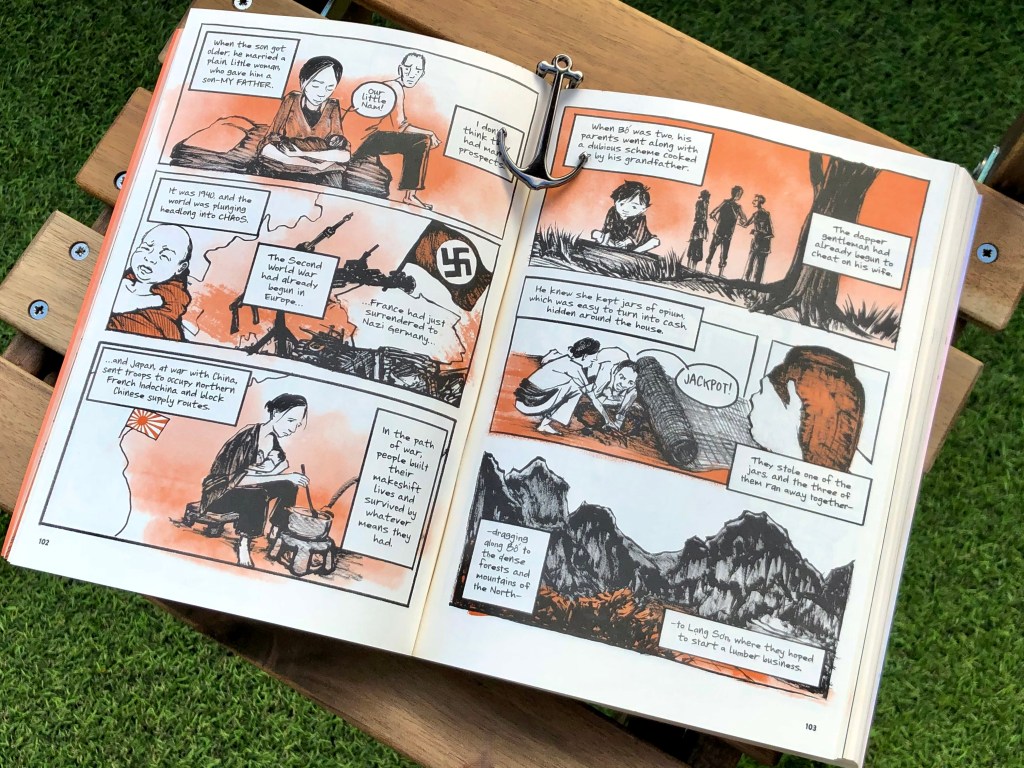
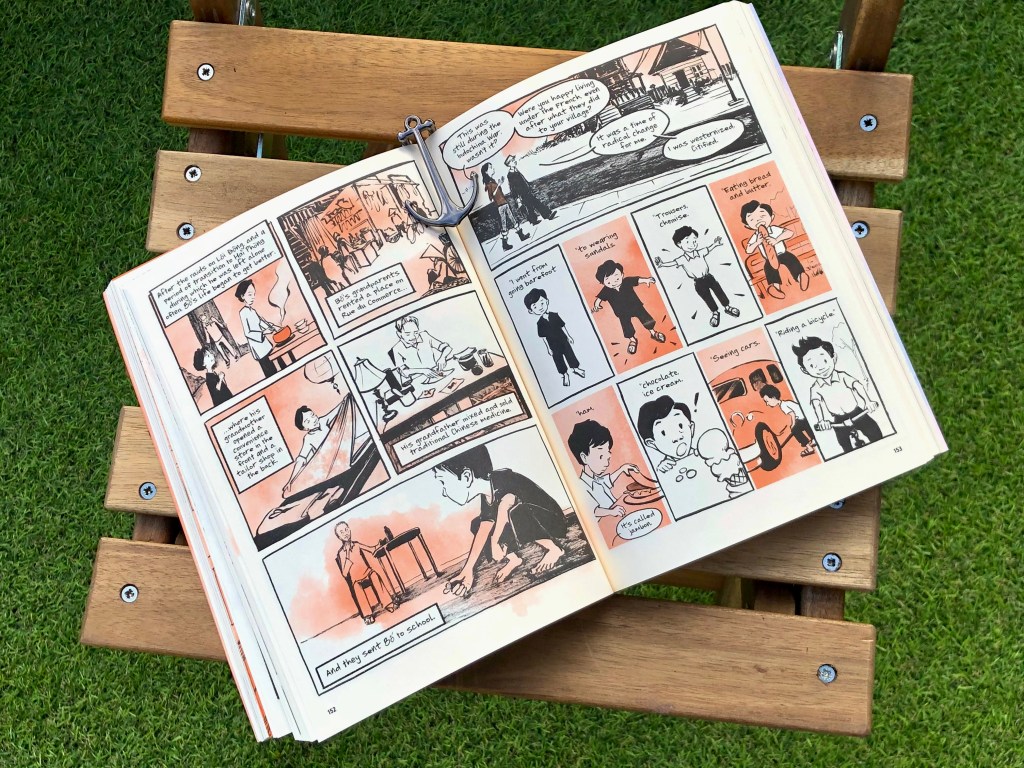
That is until I came across Thi Bui’s graphic memoir, “The Best We Could Do” and I decided that the story sounded far more important than any reading hang ups that I had developed over the years. I picked this beautifully illustrated and poetic book as my holiday read – thinking since I had recently moved to a new continent during a global pandemic I needed something light and  I am glad to say that this book went against all my expectations and did not give me the lightness I expected but rather gave me a need for deep and necessary reflection. 

The Best We Could Do is a graphic memoir of writer Thi Bui who was born three months before the end of the Vietnam War who moved to the United States in 1978. The book explores the lives of the author’s family before and after moving to the United States. It is a book about immigration, the lasting effects of being displaced and the impact on her family as a whole. Thi Bui was prompted to explore the story of her family and their origins after becoming a mother herself and reflecting on the innumerable sacrifices that her parents have made for her and her siblings. 

To say that I enjoyed this book is probably an under statement. I always love a book that makes me immediately pull up google and read up about a place or an event that took place that I never paid much attention to. Having grown up in South Africa there are just certain aspects of the world that I simply was not aware of. I took no history in school and even when I had the opportunity to learn I just wasn’t ready to read about the lives and the displacements of other people given the history of displacement that most South Africans have. The Best We Could Do is a story about life, love, war, the impact of war on life and love and so much more. It is a story about parenthood, about choosing a life not for yourself but for your children because you had to and nothing else mattered.  

What the author does with the words and the imagery in this book is makes the reader go through an entire spectrum of emotions and by putting you in a position where you question what it feels like to be displaced and to have your entire world change, what it means to try your best to succeed in a foreign place and what if you had to do all that and still ensure that your children survived and thrived.

“I think a lot of Americans forget that for the Vietnamese the war continued, whether America was involved or not.”

I am not a parent myself however I could see how becoming a new parent might have pushed the author to look into her history and the history of parents. I think there are certain moments in life that make us acutely aware of the many things that we took for granted and having turned 31 this year one of those things for me has been looking at all the people who came before me in my family and the small steps they each took to put me in a position to be in a better place right now. 

I loved this book. I found the words to have a rhythm about them that made the book hard to put down and I found the images on the pages to be beautiful and intricate. This is the sort of book that will make you want to examine your lineage and will have you questioning why more of us aren’t bold enough to tell our stories and to tell them in this way. 

I would recommend this book to anyone looking for a story of family, love, war and life that is told beautifully and that engages you in a way that leaves you with lots of questions for yourself and for the those who have come before you. 

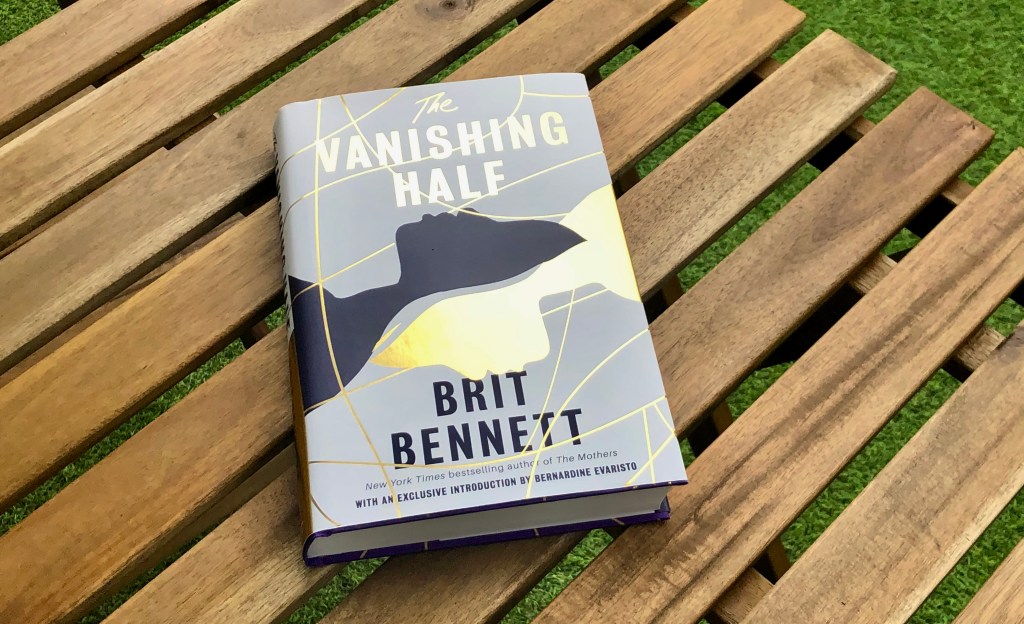
Book Review: The Vanishing Half

She’d grown up in her mother’s eyes, no longer her daughter but a separate woman, complete with her own secrets”

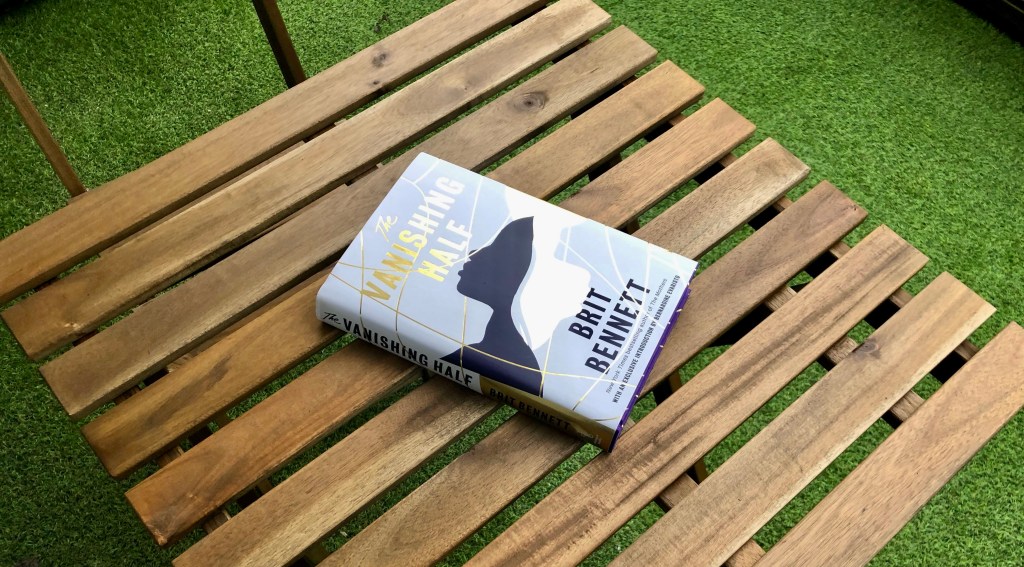
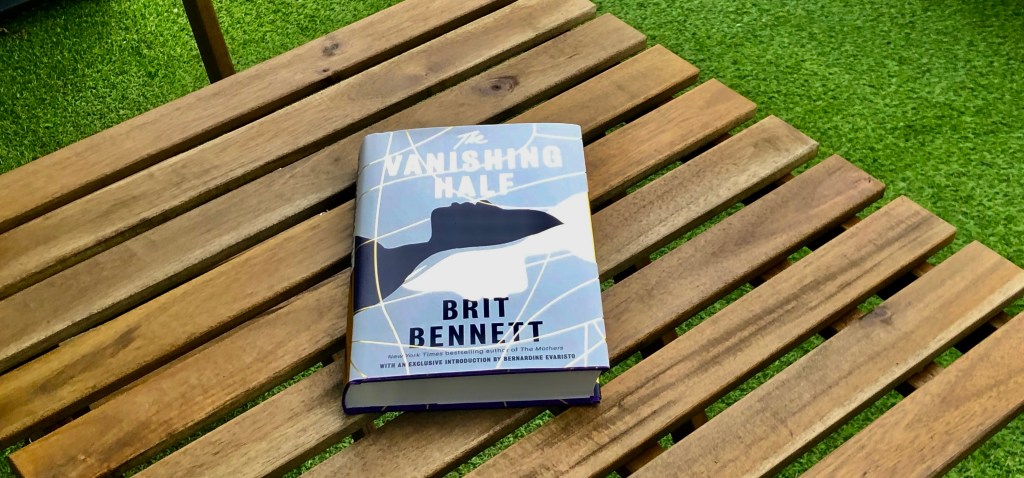
I am going to start with pure honesty and say I have no idea where to start with this review, not only because this book was extremely popular but because this book earned and deserved every bit of the popularity it received. 

I actually put off reading this book because of how popular it was. My main reason for doing this was because I have found that in the past when I have read popular books at the height of their popularity I almost entirely miss the book. I am more likely to rush through the story and to base my enjoyment of the book on what everyone else says it should be. Yes, I am flimsy like that and I sometimes succumb to wanting to just fit in by enjoying a book that everyone enjoys.  With this book however, it turns out that I had no reason to worry.

I am one of those people who likes opening a book with no knowledge of what to expect and I tried to take in as little as was possible about this book (this was very hard because this was one of the most popular books of 2020), I went in as clueless as I could and I still I was not immune to the captivating quality that was this phenomenal book and Brit Bennett’s writing. 

“Important men became martyrs, unimportant ones victims. The important men were given televised funerals, public days of mourning. Their deaths inspired the creation of art and the destruction of cities. But unimportant men were killed to make the point that they were unimportant – that they were not even men – and the world continued on”

The Vanishing Half is a book about twin sisters who come from a town called Mallard that prides itself on having an entirely light skinned African American population. The book moves between two time periods being the late 1960’s and the early to late 1980’s. In this book we follow the lives of of the sisters as one of them (Stella) makes a decision to pass and live her life as a white woman and the other (Desiree) lives her life as an African American woman. With what appears to be an already rich grounds for a story, Brit Bennett manages to somehow go the extra mile and not only give us the complex issue of sisters being apart from another and a history of passing and but she also allows us to explore the important topics of colourism, racism, abuse, and love. Love was by far my favourite part of this book and if a book should come out that consists of Jude and Reese just walking around eating sandwiches all day I am all here for it!

When I think back to the themes that were explored in this book my head nearly spins when I thinking of how brilliantly Brit Bennett juggled all these topics in 343 pages and while at the same time crafting characters that are easy to bond with on a very deep level. I remember reading a part of the book and pausing to cry because Jude and Reese seemed to be happy and the thought of any more sadness coming to them made me want to end the story right there,  but I didn’t because I was tied to Desiree, Early, Adele, Kennedy and Stella. I needed to know how everyone’s story was going to end. And that is the beauty of this book. 

This book unpacks so much with the patience of someone who is slowly telling you a story while basing your scalp with some coconut oil. The story felt as personal as having an old friend walk though your door, shaking their head in disbelief and saying “girl, have I got a tale for you?” That is how deeply invested I was in this story. Brit Bennett did a great job of telling us a story about the many forms of family and relationships take while opening us up to some very deep (and necessary) topics. 

This was a story of transformation for so many people and it was great to see their masks disappear as the characters became more and more of themselves, while others sunk deeper and deeper into the lives they built for themselves on top of the new versions of themselves that they had created.

I rated this book 4.5 starts (rounded up to 5) because I wanted more from the ending. I loved this book and I think the more I read the more I expected a notch above perfection (which might be a bit unfair) but I think the ending didn’t give me that, it took away a little bit from me and how much I loved this book. 

I think the book is worth the read. I would recommend this book to anyone and everyone. It deserves the accolades it has received so far and it is definitely worth your time. 

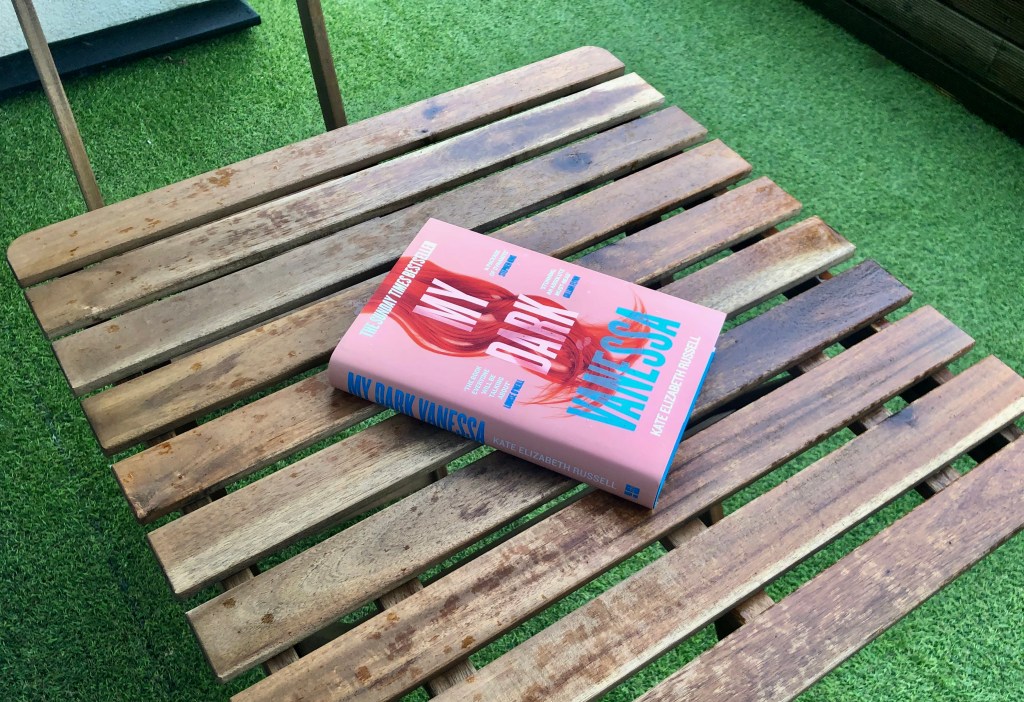
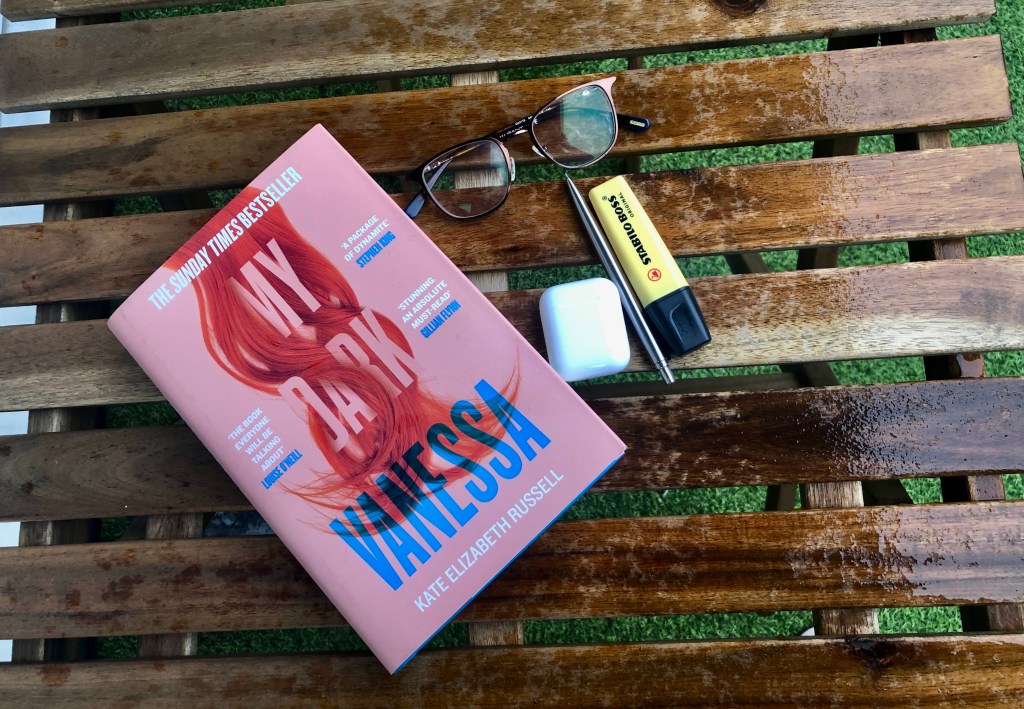
Book Review: My dark Vanessa

“There must be a point where you’re allowed to be defined by something other than what he did to you” 

I tried reading this book in 2020 but I wasn’t ready for it so after reading the first few pages I decided to put it down and wait for my emotions to settle. 2020 was a lot like that, most things were started and not completed because half way through I realised I had to get myself settled; my emotions, my mind and my body needed soothing on most days. 

I picked this book up again on the 20th of January 2021 and I was completely drawn in by it this time around. I couldn’t put it down, I would look at it longingly during my work day, wishing that in the pages to follow Vanessa was okay, that she had found a way to heal and a way to be more than her abuse. 

My Dark Vanessa is a book about a fifteen year old girl who enters into a relationship with her 42 year old English teacher and who now in her thirties is coming to terms with the fact that what she deemed a great love story was rape and abuse. The story is gripping, painful and Kate Elizabeth Russell wrote a “all in, not holding back” book. She was not afraid to make us go there and to make the reader feel every necessary feeling with this book. 

The book moves between two timelines. The early 2000’s when Jacob Strane singled Vanessa out and started grooming her and the following relationship through the years. The second timeline is in 2017, at the height of the “MeToo” movement when allegations against Strane surface and Vanessa has to reconcile what happened to her and her desperate desire to not be seen as a victim but rather as someone who had agency and entered the relationship with wide open eyes. 

“ “How much strength does it take to hurt a little girl? How much strength does it take for the girl to get over it? Which one of them do you think is stronger?” The questions hangs there, the answers obvious – she’s the strong one. I’m strong, too, stronger than anyone has ever given me credit for.” 

The writing in this book is immaculate and tender, Kate Elizabeth Russel wrote this book with it’s very heavy topic with a sort of precise care that cannot be ignored. She did not tip-toe around the subject, the conversations  and the topics – she dug her hands in deep and did it in a way that invited the reader to feel and understand both versions of Vanessa. The Vanessa that was desperate for this to be a beautiful love story and a sexual awakening and the Vanessa that wanted to say out loud that it was abuse and still ask that she be seen as more than her abuse. 

I feel like in this book I experienced Vanessa’s fears of being branded by his abuse for her whole life and her desire to not be seen as a victim. I understood it all and I sympathised with it all. I wanted things for Vanessa that I did not know I could want for a character. I wanted her to be safe once I finished the book, I wanted her to be taken care of and I wanted her to heal. I so badly wanted her to heal. 

I gave this book 5 out of 5 stars because I think the writer did an excellent job of telling a story that had no option but to be a bad story. No one goes into this book thinking “this will be jolly, there will be a happy ending” but one leaves the book feeling like the author is currently out there taking care of Vanessa and making sure she’s alright, Vanessa was written with a lot of care and I enjoyed that about the book. I also liked that there wasn’t much suspense, the book started off with what had happened and so when reading the book I wasn’t scared that some other monster would pop up and make the story even worse, I felt like I was following along as Vanessa told the story while she interrupted herself with her own questions of “what”, “why” and “how”. This was a great book. I do however think it’s the sort of book one has to be ready for, I think reading it when you aren’t ready for it could make you spiral. It’s a book that says the obvious, “abuse is permanent, the abused carries it with them for a lifetime” and I think Kate Elizabeth Russell did an excellent job telling this story the way she did. 

On Meal Time Meditation

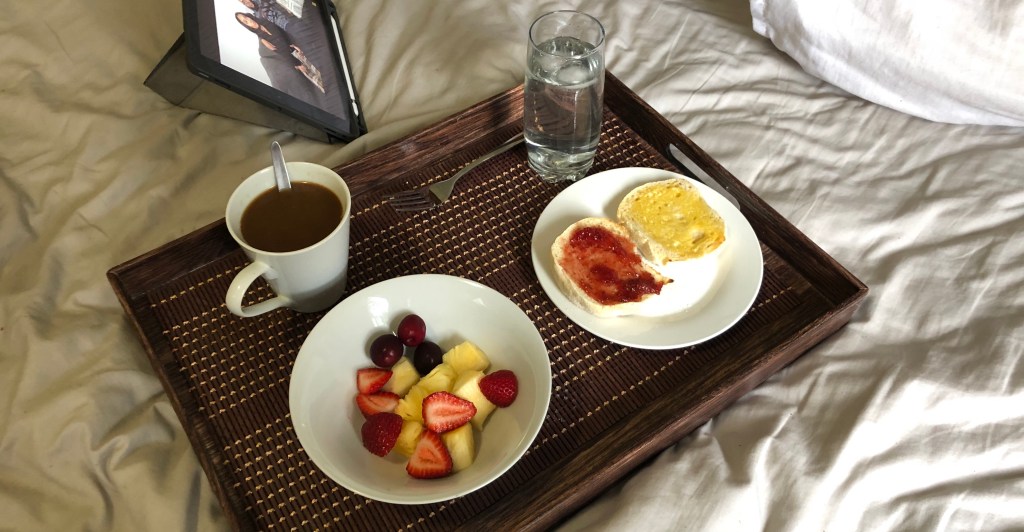
I take meal time very seriously. I am one of those people who finds no delight in bragging about being too busy that I don’t get to eat. I enjoy meal time, I enjoy setting out time in my day to sit, eat my food, take in the flavours and think about nothing more than each bite.

Unfortunately however I do not work in the kind of space where this is celebrated. In my line of work it is almost expected that you be willing to miss out on meal time in order to make this or that deadline. I am happy to say that amidst all of this pressure I have maintained my right to have a meal away from my laptop at least most of the time.

I recently watched an interview with Tracee Ellis Ross who was being interviewed by Oprah. Tracee as we all know has come to not only be known as a talented actress, a businesswoman, the daughter of a legend but also as a self care goddess living what she terms “a joyful and juicy life”. I am a big fan of Tracee, I have loved her and watched her since her time on Girlfriends where she played the role of Joan, who I can only describe as the poster child for the careful black girl. I identified with Joan, and I thought Tracee was hilarious (I also appreciated that she represented those of us who are lacking in cup size).

Anyway back to the interview. In the interview Tracee said something very interesting about meditation in which she said she defines it as “doing what you’re doing when you’re doing it” . I thought this view on meditation was brilliant because it made it possible to do it everywhere and in everything. As though reading my mind Tracee went on to describe how she tries to do this while eating her food, specifically soup, which forces you to slow down, sit down and eat.

Since watching this I have been even more adamant about my meal time. I am working through a lot of beliefs that I thought I’d let go off about what it means to be productive, worthwhile and valuable. I am unlearning the belief that in order for me to be any of the things I’d like to be for my team I have to become anxious, overworked and unable to take time off to eat when the time comes.

The commitment to this sort of resolution requires me to be okay with going at it alone. This means sometimes delaying my meal time until a task is done so I can be fully present with my food. It sometimes looks like sitting cross legged at my desk with my laptop closed and eating my food while listening to music. And sometimes it means having meal time by myself because no one else shares my beliefs around food and meditation. However the commitment to my resolution shows up, part of doing what I am doing while I do it is me accepting that it won’t always look the way I want it to be and sometimes I’ll have to be flexible enough to let go of my perfect picture. But sometimes, only sometimes, it also means insisting that it needs to be the way I want it to be, even if it is for myself and by myself.